


Comparative Analysis: 75kV vs. 90kV High-Voltage Cables for Medical X-Ray Systems
Technical Brief: Key Differences Between 75kV and 90kV High-Voltage Cables
Selecting the correct high-voltage (HV) cable is crucial for the safety and image quality of radiographic systems. While both 75kV and 90kV cables serve to connect the generator to the X-ray tube, they differ significantly in insulation, construction, and application. Here is a detailed comparison to guide your selection.
1. Electrical Performance
• Insulation Requirements: 90kV cables demand superior insulation properties. Higher voltage necessitates greater dielectric strength and thicker insulation to prevent leakage current and electrical breakdown. Consequently, 90kV cables feature thicker insulation layers and utilize higher-grade insulating materials compared to their 75kV counterparts.
• Electric Field Distribution: Operating at 90kV creates a more intense and complex electric field. Cable design must incorporate precise control over field distribution to prevent partial discharge and insulation failure. This often involves advanced shielding technologies and optimized conductor geometry.
• Withstand Voltage Capability: 90kV cables exhibit a higher tolerance for voltage surges and transient overvoltages. They are engineered to withstand greater electrical stress, making them more robust in unstable power environments.
2. Structural Design
• Insulation Thickness: As mentioned, the primary structural difference is the insulation thickness. The 90kV variant requires a significantly thicker dielectric layer to ensure safe operation at higher potentials.
• Shielding Layer: To manage the stronger electromagnetic fields, 90kV cables typically employ more sophisticated shielding. This may include higher-conductivity materials (like semi-conductive layers) and tighter braiding to ensure effective noise reduction and signal integrity.
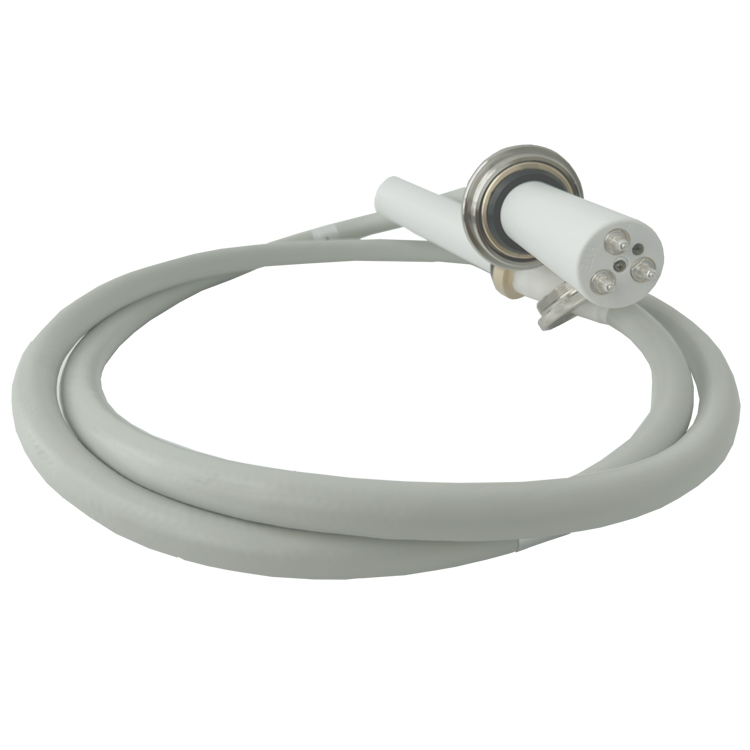
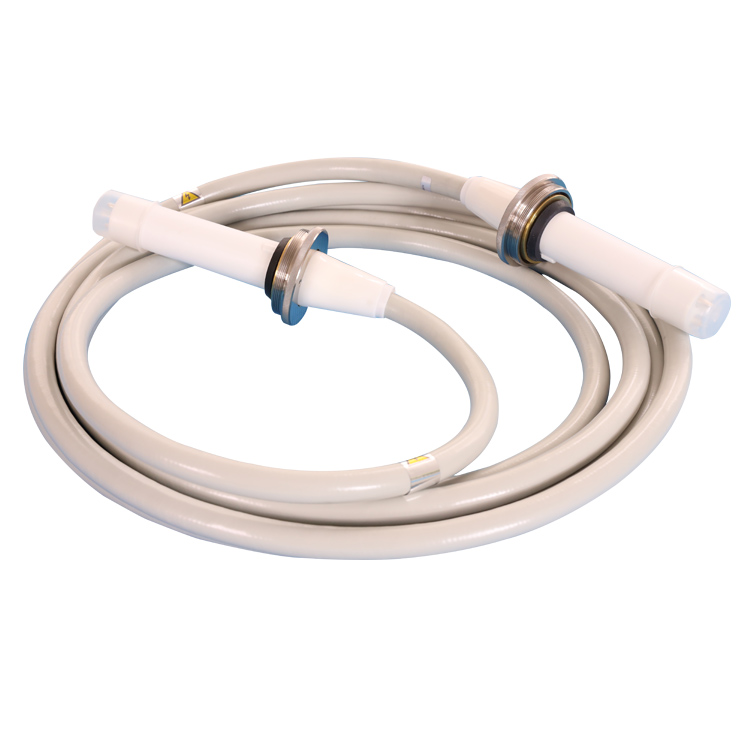
• Physical Dimensions & Weight: Due to increased insulation and shielding, 90kV cables generally have a larger outer diameter and are heavier than 75kV cables. This impacts handling, bending radius requirements, and cable management within the installation space.
3. Application Scenarios
• Equipment Matching:
◦ 75kV Cables: Standard for connecting generators to 125kV X-ray tubes (common in general radiography and R/F rooms).
◦ 90kV Cables: Required for 150kV X-ray tubes, typically found in specialized applications such as vascular angiography, CT scanners, or high-powered R/F systems.
• Transmission Distance: In theory, 90kV systems can support longer transmission distances with lower energy loss (P_{loss} = I^2R). However, in medical settings where distances are short, the choice is dictated more by the tube’s kV rating than by distance. 75kV cables suffice for standard room layouts, while 90kV cables provide headroom for complex installations.
• Operating Environment: Both cables are suitable for clinical environments. However, in areas with high electromagnetic interference (EMI) or where maximum voltage stability is paramount, the enhanced shielding of a 90kV cable offers distinct advantages.

4. Manufacturing Process & Cost
• Manufacturing Complexity: Producing 90kV cables involves stricter process controls. Precision in insulating material extrusion, conductor stranding, and shield application is critical. Higher levels of automation and quality assurance are required to eliminate microscopic defects that could lead to failure at high voltages.
• Cost Implications: The superior materials (insulation, shielding), complex manufacturing processes, and rigorous testing protocols make 90kV cables significantly more expensive. Procurement decisions should weigh the necessity of the higher specification against budget constraints—using a 90kV cable on a 125kV system is technically safe but economically inefficient.
Summary
The choice between 75kV and 90kV HV cables is determined by the maximum tube voltage of your X-ray system. Never use a 75kV cable on a 150kV tube, as this poses a severe safety risk. Conversely, while a 90kV cable can be used on a 125kV system, ensure the investment aligns with your operational requirements. Always prioritize matching the cable rating to the equipment specifications to guarantee safety and longevity.